
Views: 279 Author: Sunny Publish Time: 2026-09-30 Origin: Site


Content Menu
● Why Wall Panelling Is Changing in Modern Interiors
● Main Types of Wall Panelling at a Glance
● PVC Wall Panels for Wet and Fast-Track Projects
>> What to Check Before Buying PVC Wall Panels
● UV Wall Panels for High-Impact Decorative Surfaces
>> UV Panel Specification Advice
● PU Stone Panels: Lightweight Texture for Feature Walls
>> Design the Lighting With the Panel
● Fluted Wall Panels and Acoustic Slat Panels
● How to Choose the Right Wall Panel Material
>> 1. Define the Environmental Conditions
>> 2. Identify the Required Visual Effect
>> 3. Verify Fire and Indoor-Air Requirements
>> 4. Plan Installation Before Ordering
>> 5. Compare Total Project Cost, Not Unit Price
● Why Material Transparency Builds Trust
● Work With a Custom Wall Panel Manufacturer
>> 1. What is the best wall panelling for bathrooms?
>> 2. Are UV wall panels waterproof?
>> 3. Are fluted wall panels good for soundproofing?
>> 4. Is PU stone better than natural stone?
>> 5. What does E1 or E0 MDF mean?
>> 6. Which wall panels are best for hotels?
Choosing the right type of wall panelling is no longer just a decorative decision. For hotels, villas, retail interiors and residential projects, the best wall panel must balance design impact, moisture resistance, fire-performance documentation, installation speed and long-term maintenance.
After working with global buyers and interior-project teams for 14 years, Binmao Decor has seen one consistent challenge: an attractive wall finish can still become a costly mistake if its substrate, installation condition, fire-test documentation, or wet-area suitability has not been checked first. This guide explains the most useful types of wall panelling—from classic MDF and wood veneer to PVC wall panels, UV panels, PU stone and acoustic fluted panels—so you can specify a solution with more confidence.

Traditional wall treatments such as paint, wallpaper, ceramic tile and natural timber still have their place. However, they can involve longer installation cycles, higher labour costs, surface-preparation requirements and more complex maintenance.
Modern decorative wall panels offer a different approach. They can create wood, stone, marble, fabric, metal or textured effects while supporting faster dry installation. For commercial fit-outs and hospitality renovation projects, that speed can be especially valuable because room downtime affects operations and revenue.
The original article from Wall Panels World provides a useful introduction to traditional styles such as beadboard, shiplap, herringbone, tongue-and-groove, wainscoting, slat walls and board-and-batten. It is a strong visual style guide, but it leaves several practical specification questions unanswered:
- Which wall panel works best in bathrooms, spas and other humid spaces?
- Which substrate is suitable for high-traffic hotels and commercial corridors?
- What is the difference between a decorative fire-retardant claim and a verified fire-test report?
- How should designers compare PVC, WPC, MDF, PU and UV-coated panels?
- What installation details prevent visible joints, warping and premature failure?
- Which panel structure supports acoustic comfort in meeting rooms, restaurants and bedrooms?
This article fills those gaps with a material-led selection framework suitable for contemporary interior projects.
The table below compares the most common decorative wall panel categories used in residential, hospitality and commercial interiors.
| Type of wall panelling | Typical construction | Best applications | Main advantages | Key specification checks |
|---|---|---|---|---|
| PVC wall panels | PVC decorative surface with lightweight panel structure | Bathrooms, kitchens, utility rooms, rental properties | Waterproof, low maintenance, fast installation | Thickness, impact resistance, joint design, fire-test report |
| UV wall panels | UV-coated decorative board, often marble-, wood- or metallic-look | Hotel lobbies, reception walls, retail displays, feature walls | Glossy or matte premium finish, stain resistance, fast visual upgrade | Surface hardness, scratch resistance, substrate and edge sealing |
| PU stone panels | Lightweight polyurethane moulded stone finish | Villas, hotel feature walls, restaurants, retail concepts | Realistic stone texture, lighter than natural stone, easy handling | Fire behaviour, colour variation, adhesive compatibility, corner details |
| Fluted wall panels | MDF, WPC, PVC or composite slatted/fluted profile | Bedrooms, lounges, offices, restaurants, commercial feature walls | Strong visual rhythm, modern appearance, can support acoustic designs | Substrate, veneer or film quality, spacing, backing and fire rating |
| Acoustic slat wall panels | Decorative slats over acoustic felt or sound-absorbing backing | Meeting rooms, hotels, cinemas, offices, restaurants | Design-led acoustic treatment and visual warmth | Acoustic test data, installation method, wall coverage and fire performance |
| MDF wall panels | E1/E0 MDF with paint, melamine, PVC film or veneer | Bedrooms, corridors, dry living spaces, joinery-style interiors | Smooth machining, premium paintable finish, flexible detailing | Formaldehyde class, moisture exposure, sealing and ventilation |
| Natural wood veneer panels | MDF, plywood or composite core with real oak, walnut or other veneer | Luxury hotels, villas, executive offices | Authentic grain and premium character | Veneer thickness, matching method, finish system, humidity control |
| WPC wall panels | Wood-plastic composite profile | Semi-humid interior areas, corridors, decorative ceilings | Stable decorative texture and practical maintenance | Composition, expansion allowance, fixing system, tested performance |
| Board-and-batten / wainscoting | MDF, timber, PVC or composite mouldings | Staircases, dining rooms, hotel corridors, villas | Classic architectural detail and wall protection | Height, impact zones, paint system and substrate stability |
| Geometric panels | CNC-cut MDF, PU, PVC, gypsum or composite panels | Feature walls, retail, gaming rooms, branded spaces | Customisable visual identity and high design impact | Pattern alignment, lighting plan, cleaning access and replacement pieces |
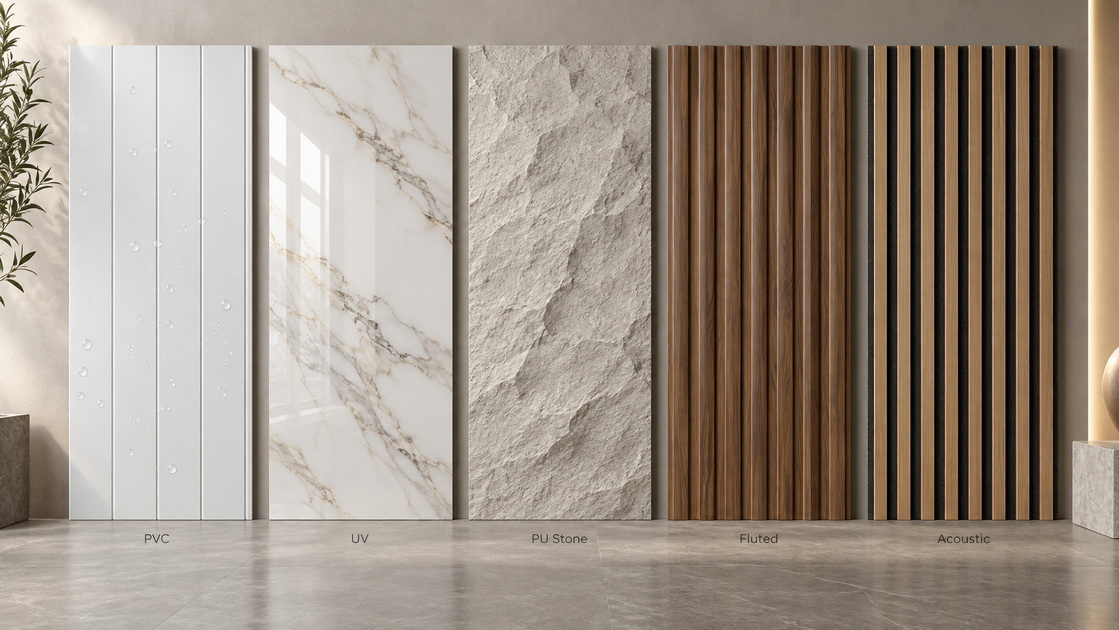
PVC wall panels are among the most practical options for interiors exposed to humidity, splashes and frequent cleaning. They are often selected for bathrooms, kitchens, utility areas, changing rooms and certain hospitality back-of-house applications.
For project buyers, their appeal is straightforward: a well-designed PVC panel system can reduce the need for wet trades, grouting and lengthy drying time. Compared with tiled surfaces, it may also create fewer grout lines where dirt, mould and cleaning residue can accumulate.
At Binmao Decor, PVC wall panel solutions can be developed with different widths, thicknesses, decorative films, edge profiles and surface finishes to fit specific project requirements. A wood-look PVC panel may suit a compact hotel bathroom, while a marble-look panel may be used for a modern shower-wall concept when the full system—including joint treatment and installation method—is appropriate.
Do not select PVC panels based on appearance alone. Ask suppliers for the following:
1. Waterproof construction details
Confirm whether the full panel system—including joints, trims and edge treatments—is designed for wet areas.
2. Fire-performance evidence
"Fireproof" is often used too loosely in marketing. Ask for applicable, current test reports and confirm whether they apply to the exact product construction and finish.
3. Panel thickness and impact resistance
Thinner panels can be lightweight and economical, but high-traffic commercial interiors may require a stronger structure.
4. Decorative film quality
Check colour consistency, scratch resistance, cleaning resistance and UV stability where natural light is strong.
5. Installation support
Professional technical guidance matters. Adhesive selection, batten spacing, expansion gaps and trim details all affect the finished result.
PVC panels are usually best for practical projects where moisture resistance, easy cleaning and installation efficiency matter more than the tactile authenticity of natural wood or stone.
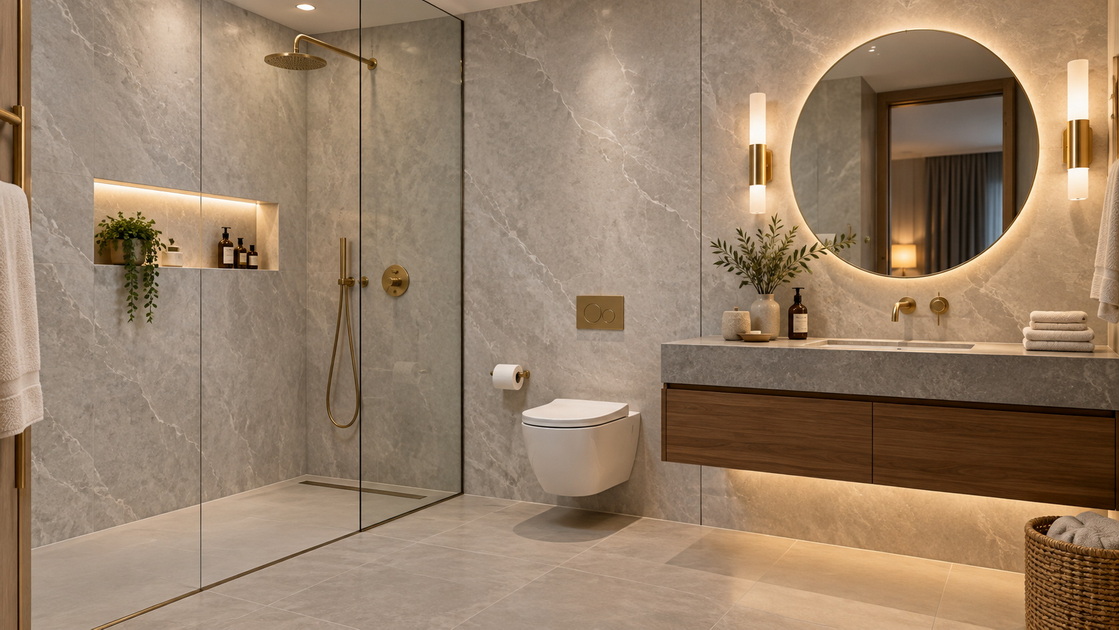
UV wall panels use a UV-cured decorative surface that can create a sharp, polished visual effect. They are commonly available in marble, stone, wood, metal, fabric and solid-colour designs. Depending on the product, the finish can be high gloss, super matte, textured or digitally printed.
These panels are particularly effective in reception areas, hotel room headboard walls, retail displays, restaurant interiors and commercial corridors. Their large-format visual effect can make a space feel more finished without the weight and installation complexity of natural stone slabs.
A typical project use case is a hotel reception wall. Instead of relying on heavy natural marble, a designer can specify UV marble-look panels for the main decorative field, add PU stone around architectural columns, and use fluted panels behind the reception desk. This creates material contrast while allowing faster installation and easier future replacement.
- Use matched batch numbers for large visible walls to reduce tonal variation.
- Request a physical sample under the project's actual lighting conditions.
- Check whether the product is intended for dry interiors only or can handle occasional moisture exposure.
- Confirm the substrate: MDF, plywood, PVC, WPC or another base material can significantly change performance.
- Specify edge trims and transitions early, especially near doors, ceilings, mirrors and electrical boxes.
PU stone panels are made from polyurethane and moulded to reproduce the texture of stacked stone, brick, slate, travertine or other masonry effects. Their greatest advantage is visual character without the dead load and complicated installation associated with natural stone.
For villa exteriors, restaurant feature walls, hotel lounges, retail displays and themed commercial spaces, PU stone can help achieve a premium textured finish quickly. It is also useful where structural load, transportation cost or installation time makes natural stone impractical.
However, realistic appearance depends on careful project planning. Avoid installing identical panels in a repetitive pattern. Mix panel orientation where the system allows it, stagger joints, select matching corner pieces, and plan lighting so that texture reads naturally rather than exposing repeated mould patterns.
Raking light—light that travels across the wall at a shallow angle—makes a stone or fluted surface more dramatic. It can also reveal poor joint alignment. Before full installation, create a small mock-up with the intended lighting direction, panel joints and trims. This simple step can prevent expensive rework on hotel and retail projects.
[Suggested image: A close-up installation mock-up of PU stone panels with warm wall-washer lighting.]
Fluted wall panels have become a defining feature of contemporary hospitality and residential interiors. Their vertical grooves create shadow, rhythm and a sense of height. Depending on the material, they can look warm and architectural, minimal and modern, or bold and commercial.
Binmao Decor can develop fluted wall panel systems in PVC, WPC, MDF, wood veneer and acoustic-backed constructions. This flexibility enables designers to match the product to the project environment rather than forcing one material into every application.
For example:
- PVC or WPC fluted panels can suit practical interiors where moisture resistance and easy care are priorities.
- MDF fluted panels are well suited to refined dry spaces where painted, laminated or veneered detail is required.
- Oak or walnut veneer fluted panels add natural material depth to luxury villas, hotel suites and executive environments.
- Acoustic slat wall panels can be considered for meeting rooms, restaurants, lounges and bedrooms where comfort and sound control are important.
It is important to distinguish decorative fluted panels from tested acoustic systems. A grooved surface alone does not automatically make a wall acoustically effective. Meaningful acoustic performance depends on the complete assembly: slat geometry, backing material, air cavity, substrate, room size and installation method.
A reliable specification process starts with the room, not the trend. Use this practical decision path before requesting quotations.
Ask whether the area is dry, humid, splash-prone, high traffic, sunlit, temperature-variable or subject to regular cleaning.
For example, a villa living room may support MDF with walnut veneer, while a hotel bathroom usually requires a more moisture-tolerant system such as a properly installed PVC-based panel solution.
Choose the design language first:
- Wood warmth: oak veneer, walnut veneer, wood-look UV panels or wood-grain PVC/WPC
- Stone texture: PU stone, UV marble panel or stone-look PVC
- Modern linear rhythm: fluted panels or acoustic slat walls
- Classic architectural detail: wainscoting, board-and-batten or painted MDF mouldings
- Bold brand identity: geometric panels, digitally printed UV panels or custom CNC designs
Fire-performance wording should be exact. ASTM E84 is a test method for comparative surface-burning characteristics of exposed walls and ceilings, reporting flame-spread and smoke-developed indices. It does not, by itself, establish a product's fire resistance or structural fire performance.
For European projects, EN 13501-1 classifies construction products by reaction to fire, including primary class, smoke production and flaming-droplet behaviour. The applicable classification must be verified for the actual panel build-up, not assumed from a generic material label.
Indoor air quality also matters, especially in hotels, schools, healthcare-adjacent spaces and enclosed residential projects. The U.S. Environmental Protection Agency identifies building materials and furnishings as potential sources of volatile organic compounds (VOCs). Ask for relevant emissions information, formaldehyde documentation for MDF-based products, and product-specific test reports.
A panel's performance depends on the wall behind it. Before installation, evaluate wall flatness, moisture condition, fixing method, expansion allowance, adhesive compatibility, electrical access and trim details.
For large projects, request:
- Approved shop drawings
- Panel layout plans
- Trim and corner details
- Sample boards or a site mock-up
- Recommended adhesive and fixing guidance
- Spare panel allowance for future repairs
- Installation instructions and after-sales technical support
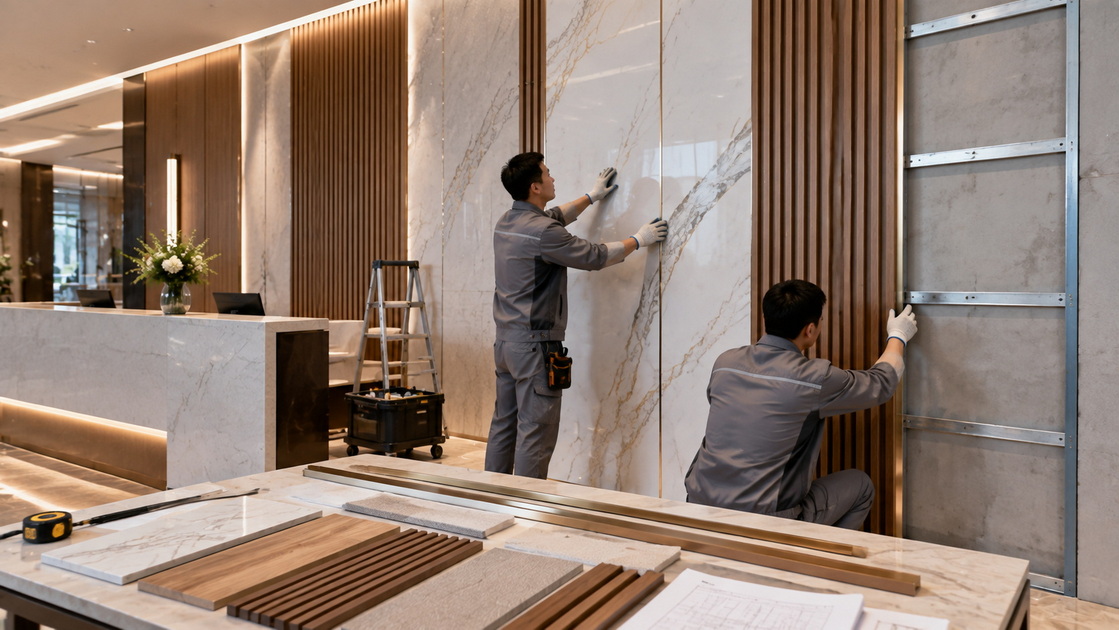
The lowest panel price does not always create the lowest installed cost. Consider transport efficiency, waste rate, installation labour, site disruption, maintenance, replacement needs and lead time.
A slightly higher-value quick-install panel may reduce total renovation downtime in a hotel or commercial space. That is often more valuable than a small difference in material cost.
For architects, contractors and importers, documentation is not an optional extra. It is part of risk control. A dependable wall panel manufacturer should be prepared to discuss the complete product specification rather than only providing attractive catalogue images.
Binmao Decor supports custom wall panel development for global customers, including product options such as:
- PVC wall panels and waterproof composite wall panels
- PU stone panels and textured decorative surfaces
- UV panels with wood, stone, marble and contemporary decorative finishes
- Fluted wall panels and acoustic-backed structures
- E1/E0-grade MDF applications
- Oak, walnut and other wood veneer finishes
- PVC, WPC and custom composite constructions
- Custom widths, depths, finishes, packaging and project-oriented details
- Product test-report support and professional installation guidance
The correct choice should always be confirmed against the project's market requirements, installation conditions and requested documentation.
The best wall panelling is not simply the most decorative option. It is the product system that fits the building environment, design intent, safety documentation, budget and installation plan.
With 14 years of manufacturing experience, Binmao Decor helps global buyers develop quick-install wall panel solutions for modern hotels, villas and commercial interiors. Whether you need waterproof PVC wall panels, UV marble panels, PU stone, wood-veneer fluted panels or acoustic-backed decorative systems, our team can support custom dimensions, finishes, packaging and technical installation guidance.
Contact Binmao Decor today to request samples, product test documentation, a customised quotation or technical recommendations for your next wall panel project.
PVC wall panels are commonly chosen for bathroom walls because they are moisture resistant, lightweight and easy to clean. However, the installation system is critical: joints, trims, sealants and substrate condition must be suitable for the actual wet-area exposure.
Not all UV wall panels have the same substrate or edge construction. A UV decorative surface may resist stains and surface moisture, but the panel's suitability for humid or wet areas depends on its full structure, edge sealing and installation method. Always confirm product-specific documentation.
Decorative fluted panels alone do not automatically provide soundproofing. Acoustic performance depends on the full wall build-up, including the backing material, air cavity, installation method and room conditions. Ask for test data when acoustic performance is a project requirement.
PU stone is not a direct replacement for natural stone in every situation. It is usually lighter, easier to transport and faster to install, while natural stone offers unique mineral variation and long-term material authenticity. PU stone is often the more practical option for decorative feature walls and weight-sensitive applications.
E1 and E0 are commonly used market designations related to formaldehyde-emission performance for engineered wood products. Requirements differ by market and test method, so buyers should request the relevant test documentation and confirm that it meets the applicable local regulation or project standard.
There is no single best option. Hotels often combine materials: waterproof PVC panels in suitable wet areas, UV panels in reception or corridor feature walls, fluted or acoustic panels in guestrooms and lounges, and PU stone for textured focal points. The final specification should consider cleaning, traffic, fire documentation, indoor air quality and maintenance.
1. Wall Panels World. "[Types of Wall Panelling: Which Style You Should Pick and Why]." Overview of common decorative styles including herringbone, tongue-and-groove, shiplap, wainscoting, slat walls, beadboard, board-and-batten, geometric panels and PVC panels. [wallpanelsworld.co]
2. ASTM International. "[ASTM E84: Standard Test Method for Surface Burning Characteristics of Building Materials]." Defines comparative measurements of surface flame spread and smoke density for exposed interior surfaces. [store.astm]
3. U.S. Environmental Protection Agency. "[Volatile Organic Compounds' Impact on Indoor Air Quality]." Notes that building materials and furnishings can be sources of VOCs. [epa]
4. U.S. Environmental Protection Agency. "[Technical Overview of Volatile Organic Compounds]." Provides technical context on VOCs in indoor environments. [epa]
5. MeasurLabs. "[EN 13501-1 Fire Classification: Performance Classes and Criteria]." Overview of reaction-to-fire classes, smoke classifications and testing concepts used for construction products. [measurlabs]
6. Capital Testing. "[ASTM E84 Surface Burning Characteristics]." Explains the Flame Spread Index and Smoke Developed Index commonly reported under ASTM E84. [capitaltesting]


