
Views: 277 Author: Sunny Publish Time: 2026-09-06 Origin: Site


Content Menu
● Expected Lifespan by 3D Wall Panel Material
● Why 3D Wall Panel Lifespan Varies So Much
>> 1. Moisture, Humidity, and Hidden Water Problems
>> 2. Material Construction and Surface Finish
>> 3. Installation Quality and Expansion Design
>> 4. Daily Wear, Cleaning, and Maintenance
● PVC vs. MDF vs. Wood Veneer: Which Lasts Longer?
>> Natural Wood Veneer Wall Panels
● Fire Performance: What Buyers Need to Verify
● How to Make 3D Wall Panels Last Longer
>> Use This Pre-Purchase Checklist
>> Match the Panel to the Space
● Why Customization Improves Service Life
>> 1. How long do PVC 3D wall panels last?
>> 2. Are 3D wall panels suitable for bathrooms?
>> 3. Can MDF 3D wall panels be used in humid spaces?
>> 4. Are PVC wall panels fireproof?
>> 5. What is the best wall panel for a hotel?
>> 6. How do I prevent mold behind wall panels?
>> 7. Can 3D wall panels be customized for commercial projects?
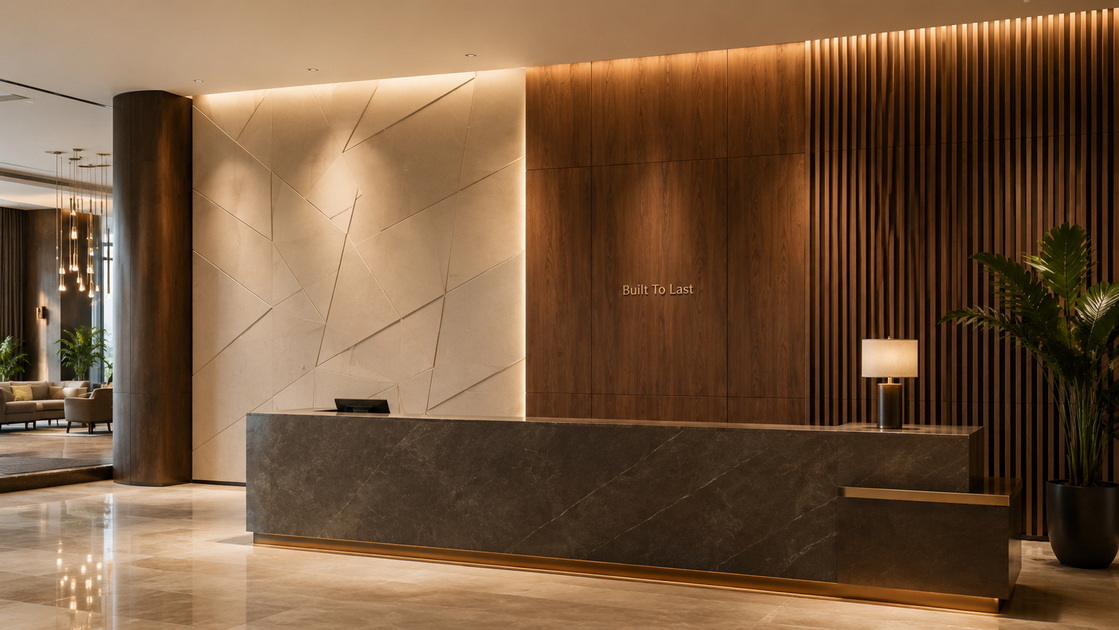
How long do 3D wall panels last? In a properly specified and professionally installed interior project, high-quality 3D wall panels can serve for 10 to 30+ years—and in some controlled, low-impact environments, selected premium systems may remain visually effective even longer. The real answer depends less on the decorative pattern and more on the panel's core material, moisture exposure, fire-performance requirements, installation method, daily traffic, and maintenance plan.
For hotel owners, villa developers, contractors, and interior-material distributors, wall-panel lifespan is not simply a product question. It is a whole-system decision. A panel that looks attractive on a sample board may fail early if it is installed on a damp substrate, exposed to direct water, paired with incompatible adhesive, or specified without considering fire regulations and cleaning demands.
At Binmao Decor, we have spent 14 years manufacturing quick-install decorative wall-panel systems for modern hotels, villas, residences, and commercial spaces. Our customizable range includes PVC wall panels, UV boards, waterproof and fire-retardant composite wall panels, E1/E0 MDF-based boards, oak and walnut wood veneer finishes, PVC/WPC structures, PU panels, and acoustic-backed solutions. This experience has shown us one important principle: the longest-lasting 3D wall panel is the one correctly matched to its environment.
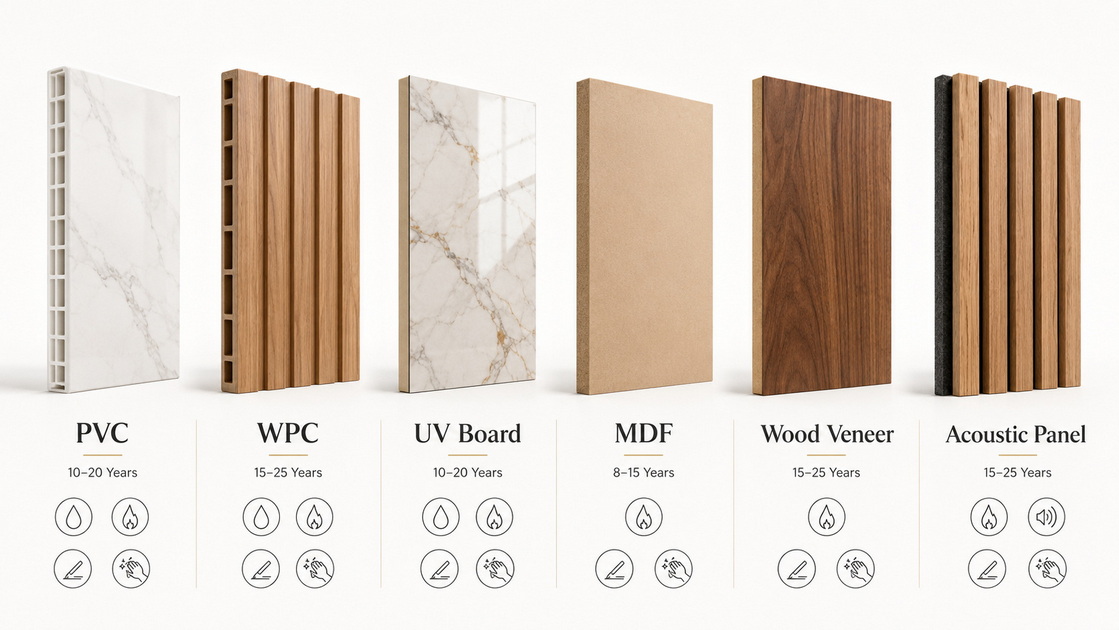
The following estimates are practical planning ranges for interior applications. They are not universal guarantees because actual service life changes with building conditions, product formulation, installation quality, maintenance, and local code requirements.
| 3D Wall Panel Material | Typical Indoor Lifespan | Best Applications | Main Durability Risk |
|---|---|---|---|
| PVC 3D wall panels | 15–30+ years | Bathrooms, kitchens, hotel corridors, retail interiors | UV fading or heat distortion in unsuitable locations |
| WPC composite panels | 15–25+ years | Residential feature walls, commercial interiors, semi-humid spaces | Poor-quality core, inadequate expansion allowance |
| UV-coated composite boards | 10–20+ years | Offices, bedrooms, hotel guestrooms, display walls | Edge damage, substrate moisture, surface scratching |
| E1/E0 MDF 3D panels | 8–15+ years | Dry residential and commercial interiors | Swelling or deformation from moisture |
| Natural wood veneer panels | 15–30+ years | Luxury villas, hotel lobbies, executive spaces | Humidity movement, veneer damage, finish wear |
| PU 3D wall panels | 10–20+ years | Decorative feature walls, lightweight renovation projects | Impact damage and incorrect adhesive selection |
| Acoustic-backed wall panels | 10–25+ years | Hotels, meeting rooms, cinemas, offices | Fabric or surface wear, moisture behind the panel |
A high-quality PVC wall panel can often be the most practical choice where water resistance, mold resistance, fast installation, and easy cleaning are critical. However, a premium wood veneer or acoustic wall system may be more appropriate for a luxury hospitality project where visual warmth and sound control matter more than direct washability.
A wall panel is not exposed to the same conditions in every project. A decorative panel in a climate-controlled villa bedroom has a much easier job than one installed in a busy hotel corridor, spa changing room, restaurant entrance, or retail checkout area.
The four factors below have the greatest influence on how long 3D wall panels last.
Moisture is one of the most common causes of early wall-panel failure. It can cause MDF and other wood-based cores to swell, weaken adhesive bonds, create discoloration, encourage mold growth behind panels, and damage decorative veneer finishes.
PVC and properly engineered waterproof composite wall panels are often selected for wet or humid zones because the panel surface does not readily absorb water in the same way as untreated wood-based materials. However, "waterproof panel" should never mean that installers can ignore water leaking behind the panel.
Before installation, inspect the wall for:
- Plumbing leaks and water stains
- Damp concrete or unfinished wall moisture
- Mold growth or musty odors
- Poor bathroom ventilation
- Cracks around windows or exterior-wall penetrations
- Uneven surfaces that may create gaps behind the panels
ASTM D570 is a recognized test method used to determine the relative rate of water absorption in plastic materials. When comparing PVC, WPC, or other polymer-based decorative panels, buyers should request test information that explains water-absorption performance, test conditions, sample thickness, and the specific panel construction tested.
Expert insight: A moisture-resistant decorative face does not solve a wet-wall problem. If a substrate leak remains active, the panel system may conceal the issue until repair becomes more expensive.
Not all 3D panels sold under the same category use the same structure. Two panels may both be called "PVC wall panels," yet differ significantly in thickness, core density, surface coating, impact resistance, locking design, backing layer, and adhesive compatibility.
For long-term commercial performance, ask suppliers about:
- Face-layer thickness and decorative-film construction
- UV coating or protective surface treatment
- Core material and density
- Panel thickness and rigidity
- Impact resistance in high-traffic areas
- Edge finishing and joint details
- Temperature tolerance
- Water-absorption test results
- Fire-test documentation
- Warranty scope and exclusions
UV-coated decorative boards can offer a smooth, cleanable finish with high visual consistency. They are often suitable for hotel guestrooms, reception desks, retail displays, and office interiors. But durability depends on whether the core remains dry and whether exposed edges are properly sealed or finished.
For luxury spaces, wood veneer panels can create a premium visual effect that printed finishes may not fully replicate. Oak, walnut, and other veneer options can provide warmth and natural variation, but they require more careful humidity control and maintenance than PVC-based panels.
A 3D wall panel may be durable in the factory yet fail on site because of poor installation. Common installation mistakes include applying panels to wet walls, using insufficient adhesive, failing to level the substrate, ignoring expansion gaps, misaligning joints, or combining incompatible materials.
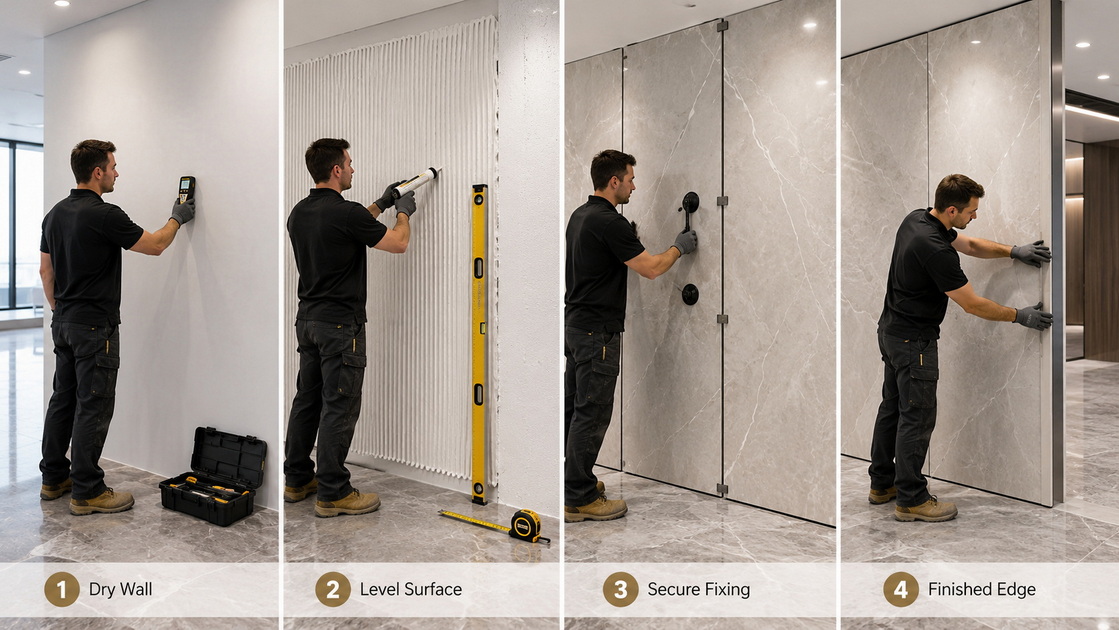
For a long-lasting installation, follow this process:
1. Assess the wall substrate. Confirm that it is clean, dry, stable, and reasonably flat before applying any panel system.
2. Acclimatize materials when required. Wood-based products and some composite panels should be stored in the installation environment before installation so they can adjust to normal temperature and humidity conditions.
3. Use the specified fixing method. Follow the manufacturer's instructions for adhesive type, mechanical fasteners, battens, clips, or concealed mounting systems.
4. Allow for movement. Composite and wood-based products can expand or contract as temperature and humidity change. Leave required perimeter and joint clearances.
5. Protect corners and exposed edges. High-contact locations, such as lobby corners, corridor ends, elevator entrances, and retail queuing areas, benefit from suitable trims or impact-resistant detailing.
6. Inspect before handover. Check alignment, adhesion, joint consistency, edge sealing, scratches, and moisture-sensitive zones before the project is completed.
Industry guidance for interior wall systems also emphasizes compliance with manufacturer instructions, adequate ventilation to carry off excess moisture, and controlled building conditions during installation.
Practical rule: If a contractor would not install flooring onto a visibly wet concrete slab, they should not install decorative wall panels over a damp wall either.
Maintenance does not need to be difficult, but it must match the panel type. PVC wall panels usually require routine dusting and gentle cleaning with a soft cloth, mild soap, and clean water. Avoid abrasive pads, harsh solvents, or aggressive scrubbing that can dull a printed or coated surface.
For commercial and hospitality projects, create a maintenance schedule before the project opens:
| Area Type | Recommended Inspection Frequency | Main Checkpoints |
|---|---|---|
| Hotel guestroom | Every 6–12 months | Edges, impacts, bathroom-side moisture, cleaning damage |
| Hotel corridor or lobby | Every 3–6 months | Scuffs, loose joints, corner damage, cleaning wear |
| Restaurant or retail wall | Every 3–6 months | Grease marks, stains, impacts, surface scratches |
| Villa living room or bedroom | Every 12 months | Dust buildup, joint movement, sunlight fading |
| Bathroom or spa zone | Every 3 months | Sealant condition, hidden leaks, mold, ventilation performance |
In humid construction or occupancy conditions, controlling temperature, humidity, and airflow is especially important. Industry guidance notes that stable environmental conditions close to normal occupancy conditions help minimize finishing and decorating problems.
The best material is not automatically the one with the longest theoretical lifespan. It is the one that gives the buyer the right balance of durability, design, compliance, budget, installation speed, and maintenance requirements.
PVC panels are widely used in moisture-prone interiors because they are lightweight, washable, and resistant to water-related surface damage. For bathroom walls, kitchens, hotel washrooms, utility areas, and fast renovation projects, PVC can offer strong value.
Best for: Wet areas, fast-fit renovation, high-cleaning environments, budget-sensitive projects.
Avoid or evaluate carefully when: The installation area receives intense direct sunlight, extreme heat, severe mechanical impact, or has an unresolved substrate leak.
MDF panels can provide clean machining, deep 3D profiles, and strong decorative flexibility. E1/E0 classifications are relevant to formaldehyde-emission performance, which makes documentation important for indoor projects. But even high-quality MDF should generally be used in dry interior spaces unless the product has a specifically engineered moisture-resistant construction.
Best for: Dry bedrooms, offices, lounges, feature walls, and controlled hotel interiors.
Avoid or evaluate carefully when: The wall is adjacent to showers, exterior moisture intrusion, kitchens with heavy steam, or poorly ventilated zones.
Wood veneer is often chosen for premium hotel, villa, club, and commercial environments. It offers a more natural visual character, especially in oak, walnut, ash, and other architectural finishes. With proper substrate control and suitable maintenance, it can remain attractive for many years.
Best for: Luxury hospitality, villas, executive offices, reception walls, and high-end feature areas.
Avoid or evaluate carefully when: Conditions are highly humid, maintenance is inconsistent, or the project expects frequent wash-down cleaning.
For hotels, apartments, offices, retail buildings, and public interiors, fire performance should be verified through applicable project requirements rather than assumed from a product description such as "fireproof" or "flame-retardant."
ASTM E84 is a widely recognized test method for evaluating the surface-burning characteristics of building materials. It provides comparative measurements of flame spread and smoke density under specified test conditions and applies to exposed wall and ceiling surfaces.
When sourcing wall panels for a project, request:
- Full fire-test report, not only a marketing statement
- Testing laboratory name and report number
- Tested product composition and thickness
- Installation or mounting condition used during testing
- Flame-spread and smoke-developed values, if applicable
- Local-market compliance requirements
- Whether the test applies to the complete assembly, including backing and adhesive
Important: A fire-test result for one panel thickness, backing, or installation method may not automatically apply to every customized version of that panel. This matters when changing the core material, acoustic backing, veneer, adhesive, or panel thickness.
At Binmao Decor, product testing reports can be provided to help buyers evaluate product performance for their target project and market. Buyers should still confirm the final specification with the project architect, contractor, fire consultant, and local authority having jurisdiction.
A durable panel system begins with planning—not emergency repair.
Before placing a wall-panel order, confirm the following:
- Is the project dry, humid, or directly exposed to water?
- Is the space residential, commercial, hotel, retail, or hospitality?
- Will guests, luggage, carts, furniture, or cleaning equipment hit the wall?
- Does the wall need acoustic improvement?
- Are there required fire ratings or test standards?
- Does the project need E1/E0 MDF, PVC, WPC, PU, wood veneer, or a custom composite structure?
- Is the selected finish easy to clean and repair?
- Can the supplier customize width, depth, pattern, edge treatment, and finish?
- Are technical drawings, installation instructions, and test reports available?
- Is professional installation support included?
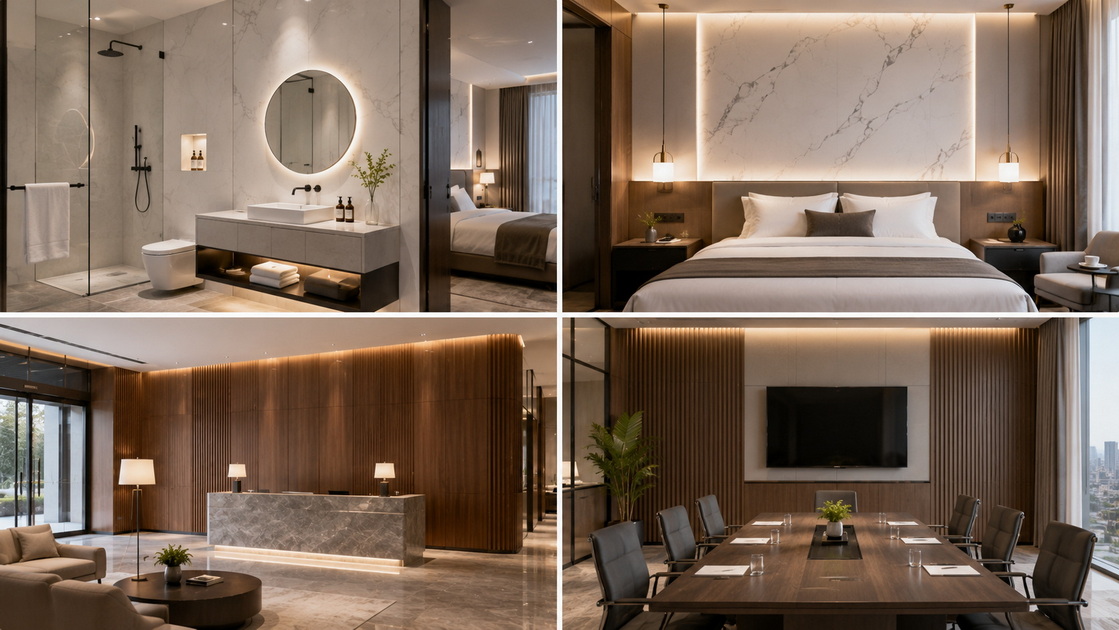
For example, a hotel may use different wall-panel systems in different locations:
- PVC or waterproof composite panels in bathroom-adjacent areas
- UV boards in guestroom headboard walls
- Wood veneer panels in a premium lobby or executive lounge
- Acoustic-backed panels in conference rooms
- WPC or impact-resistant decorative systems in corridors and public areas
This zoned-specification approach can improve both visual consistency and lifecycle value. Instead of forcing one panel material into every room, designers can select the right material where it performs best.
Customization is not only about color or style. In many projects, it directly affects durability and installation efficiency.
A custom wall panel can be produced around:
- Required panel width and depth
- Wall height and module layout
- Surface finish and decorative texture
- Fire-performance needs
- Moisture-resistance expectations
- Acoustic backing requirements
- Core material preference
- Corner, edge, and trim details
- Installation system and substrate condition
For a hotel renovation, correctly sized quick-install panels can reduce on-site cutting, lower visible joint count, improve alignment, and shorten disruption to operations. Fewer unnecessary cuts and joints may also reduce locations where moisture, dirt, or impact damage can begin.
Binmao Decor supports customized PVC wall panels, UV boards, waterproof and fire-retardant composite wall panels, MDF and wood veneer designs, PVC/WPC options, PU decorative panels, and acoustic-backed structures. Our technical support helps buyers move from material selection to a more installation-ready panel solution.
A well-chosen 3D wall panel can last well over a decade, while a high-quality PVC or premium veneer system in the right environment may remain functional and attractive for 20 years or longer. But material alone does not determine the result.
The most reliable formula is simple:
Choose the right core. Control moisture. Verify fire performance. Install correctly. Maintain consistently.
If you are sourcing quick-install wall panels for a hotel, villa, apartment, office, retail project, or distributor program, Binmao Decor can help you select a custom PVC, WPC, UV board, wood veneer, PU, or acoustic wall-panel solution based on your required dimensions, finish, performance targets, and installation conditions.
Contact Binmao Decor to request samples, technical specifications, customization options, and available product test reports for your next wall-panel project.
High-quality PVC 3D wall panels can commonly last around 15 to 30+ years in suitable interior environments. Their actual service life depends on panel quality, installation, heat exposure, direct sunlight, cleaning method, wall moisture, and impact levels.
Yes, moisture-resistant PVC and appropriately designed waterproof composite wall panels can be suitable for bathroom applications. However, the wall behind the panel must be dry and stable, plumbing leaks must be repaired, and all joints, edges, and penetrations should be properly detailed.
Standard MDF is generally best for dry interiors. Even E1/E0 MDF should not be assumed to be waterproof. If the project involves high humidity, steam, or potential direct water exposure, choose a moisture-appropriate product and request documentation for the exact panel structure.
PVC wall panels should not be described as universally "fireproof." Fire performance depends on the exact product formulation, thickness, backing, installation method, and applicable standard. Request a relevant fire-test report, such as documentation related to ASTM E84 where appropriate for the market and project.
There is no single best option for every hotel area. PVC or waterproof composite panels are often practical in moisture-prone and easy-cleaning zones; UV boards can suit guestrooms; wood veneer works well in premium public areas; and acoustic-backed systems can improve meeting rooms, lounges, and entertainment spaces.
Fix all leaks before installation, confirm that the wall is dry, maintain good ventilation, select moisture-resistant materials for humid zones, seal edges where specified, and inspect bathroom or exterior-wall areas regularly. Do not install decorative panels over active mold or an unidentified moisture source.
Yes. Professional manufacturers can customize panel width, depth, pattern, finish, core material, edge treatment, acoustic backing, and performance features. For commercial projects, buyers should also request shop drawings, installation guidance, samples, and relevant test documentation before final approval.
1. Binmao Decor. "How Long Do 3D Wall Panels Last?" Existing article reviewed and substantially restructured for improved material-selection guidance, installation detail, commercial applicability, and buyer decision support. [Original article](https://wpcspc.com/how-long-do-3d-wall-panels-last/) [wpcspc](https://wpcspc.com/how-long-do-3d-wall-panels-last/)
2. ASTM International. "ASTM E84-24: Standard Test Method for Surface Burning Characteristics of Building Materials." This standard addresses comparative measurement of surface flame spread and smoke density for exposed building-material surfaces under defined test conditions. [ASTM E84 standard page](https://store.astm.org/e0084-24.html) [store.astm](https://store.astm.org/e0084-24.html)
3. ASTM International. "ASTM D570-22: Standard Test Method for Water Absorption of Plastics." This method covers the determination of relative water-absorption rates for plastic materials. [ASTM D570 standard page](https://store.astm.org/d0570-22.html) [store.astm](https://store.astm.org/d0570-22.html)
4. Association of the Wall and Ceiling Industry. "Architectural System Specification Guide—Interior." The guidance highlights written manufacturer specifications, moisture management, ventilation, and proper requirements for interior wall systems. [AWCI specification guide](https://www.awci.org/technical-resource/architectural-system-specification-guide-interior/) [awci](https://www.awci.org/technical-resource/architectural-system-specification-guide-interior/)
5. Association of the Wall and Ceiling Industry. "When Humidity Makes Wallboard Swell." The guidance emphasizes maintaining stable temperature, humidity, and airflow close to occupancy conditions to reduce finishing and decorating problems. [AWCI humidity guidance](https://www.awci.org/media/codes-standards/when-humidity-makes-wallboard-swell/) [awci](https://www.awci.org/media/codes-standards/when-humidity-makes-wallboard-swell/)


