
Views: 267 Author: Sunny Publish Time: 2026-09-01 Origin: Site


Content Menu
● Why 3D Wall Panels Are Popular
>> Strong visual impact with less structural work
>> Broad design and finish flexibility
>> Fast installation and cleaner renovation
>> Waterproof and mold-resistant options
>> Potential acoustic improvement
● The Main Disadvantages of 3D Wall Panels
>> Higher initial cost than paint or wallpaper
>> Some materials are unsuitable for wet or harsh environments
>> Fire performance claims require documentation
>> Deep textures can collect dust
>> Trend-driven patterns may date quickly
● 3D Wall Panel Material Comparison
● How to Choose the Right 3D Wall Panel
>> 1: Define the location and risk level
>> 2: Confirm the performance requirements
>> 3: Request samples and test reports
>> 4: Review a full-size mock-up
● Installation Advice From a Manufacturer's Perspective
● Are 3D Wall Panels Worth It?
>> 1. Are PVC 3D wall panels waterproof?
>> 2. Are 3D wall panels suitable for hotel projects?
>> 3. Can 3D wall panels improve room acoustics?
>> 4. Are MDF 3D wall panels safe for interior use?
>> 5. What fire rating should commercial wall panels have?
>> 6. Can 3D wall panels be installed over existing walls?
>> 7. Which 3D wall panel is best for a villa living room?
3D wall panels can transform a plain wall into a high-impact architectural feature, but the right result depends on much more than choosing an attractive pattern. For hotel lobbies, villas, offices, retail stores, restaurants, and other commercial interiors, buyers must balance design impact, moisture resistance, fire performance, acoustic goals, installation method, and long-term maintenance.
As a China-based integrated wall panel manufacturer with 14 years of production experience, Binmao Decor works with PVC wall panels, UV wall sheets, waterproof and fire-retardant composite wall panels, MDF-based decorative panels, wood veneer finishes, WPC/PVC solutions, PU panels, and acoustic-backed structures. In real projects, we have seen that a "beautiful" 3D wall panel is not automatically the right panel. A decorative feature wall in a dry hotel suite needs different material logic from a restaurant corridor, a humid bathroom-adjacent space, or a high-traffic commercial reception area.
This guide explains the real advantages and disadvantages of 3D wall panels, compares common materials, and provides a practical specification checklist for global buyers.
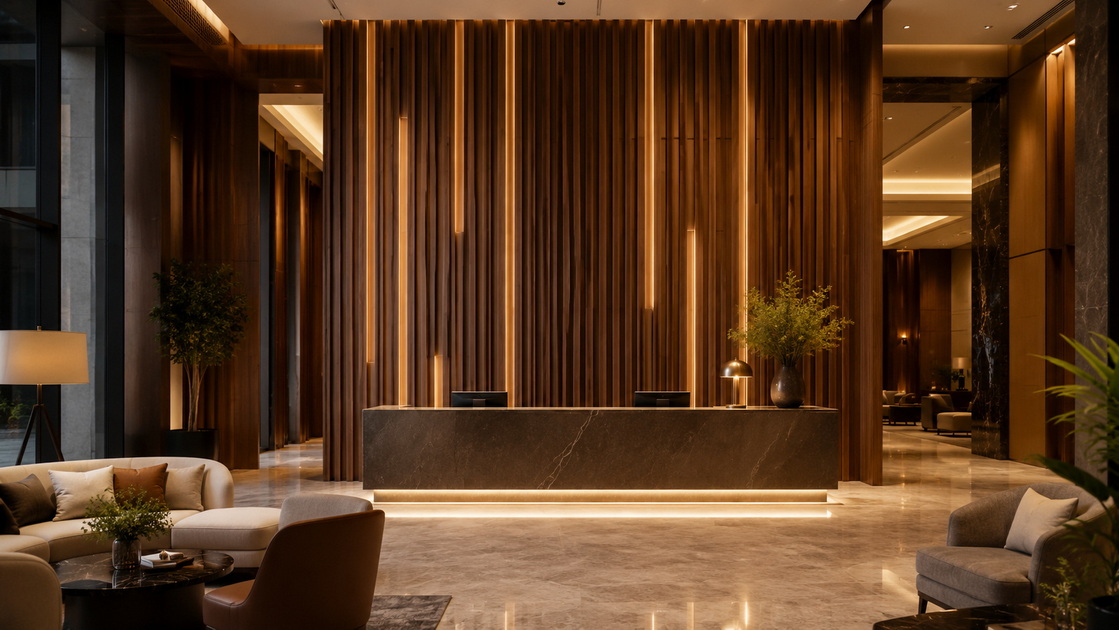
3D wall panels are decorative wall-covering systems designed with raised patterns, grooves, waves, slats, geometric forms, or sculptural textures. Unlike paint, wallpaper, or flat laminate sheets, they create physical depth and shadow across the wall surface.
The term can cover many materials, including:
- PVC 3D wall panels
- WPC wall panels
- UV marble sheets and UV decorative panels
- PU stone-look or brick-look panels
- MDF panels with melamine, PET, PVC film, or wood veneer
- Natural wood veneer wall cladding
- Fabric-covered acoustic wall panels
- Gypsum, cement-fiber, metal, or composite decorative panels
The best option is not determined by pattern alone. It should be selected based on the project's environment, design brief, installation conditions, local code requirements, cleaning needs, and budget.
The biggest advantage of 3D wall panels is their ability to make a wall look architectural without rebuilding the underlying structure. A plain painted wall can become a focal point through fluted lines, wave surfaces, wood-grain slats, stone textures, or geometric relief.
For hospitality and commercial designers, this can create a premium visual experience without the time, dust, and wet trades often associated with natural stone, tile, or custom millwork.
Typical applications include:
- Hotel reception desks and lobby feature walls
- Villa living rooms and TV backgrounds
- Restaurant dining areas and private rooms
- Retail displays and branded storefront interiors
- Office reception areas and boardrooms
- Apartment corridors and clubhouse spaces
- Spa, salon, and wellness interiors
- Exhibition booths and temporary commercial displays
A well-designed 3D panel wall also interacts effectively with lighting. Grazing light from ceiling slots, wall washers, or concealed LED strips can emphasize the texture and make a compact feature wall feel more expensive.
Modern 3D wall panels are available in much more than white geometric plaster patterns. Buyers can specify wood grain, marble visuals, fabric textures, metallic colors, stone effects, matte finishes, gloss finishes, fluted profiles, curved surfaces, and customized decorative films.
For Binmao Decor projects, customization can include:
- Panel width and thickness
- Surface depth and 3D profile
- Panel length or cut-to-size requirements
- Decorative finish and color matching
- Oak, walnut, teak, ash, or other wood-look finishes
- PVC, WPC, MDF, PU, UV, or acoustic composite structures
- Edge details, grooves, joint systems, and trim profiles
- Fire-retardant and waterproof performance options
- Acoustic backing for noise-control applications
This flexibility makes 3D wall panels especially useful for brands that want a consistent interior identity across multiple hotels, stores, showrooms, or franchise locations.
Compared with wet-applied finishes such as tile mortar, gypsum rendering, or stone installation, many interlocking or adhesive-fixed wall panel systems can shorten renovation time. This is particularly valuable in hospitality and retail projects, where downtime affects revenue.
A quick-install wall panel system may help reduce:
- Demolition work
- Construction dust
- Wet-process curing time
- On-site labor requirements
- Disruption to neighboring spaces
- Schedule risk during renovation
However, "easy installation" should not be confused with "no preparation required." Wall flatness, moisture condition, adhesive compatibility, expansion gaps, panel alignment, and edge finishing still determine whether the finished wall looks professional.
PVC, WPC, and certain UV-faced composite wall panels can be practical choices for spaces where splash resistance, humidity resistance, and easy cleaning are priorities. In appropriate product constructions, these systems can offer 100% waterproof and mold-resistant surface performance, making them suitable for many moisture-prone interior applications.
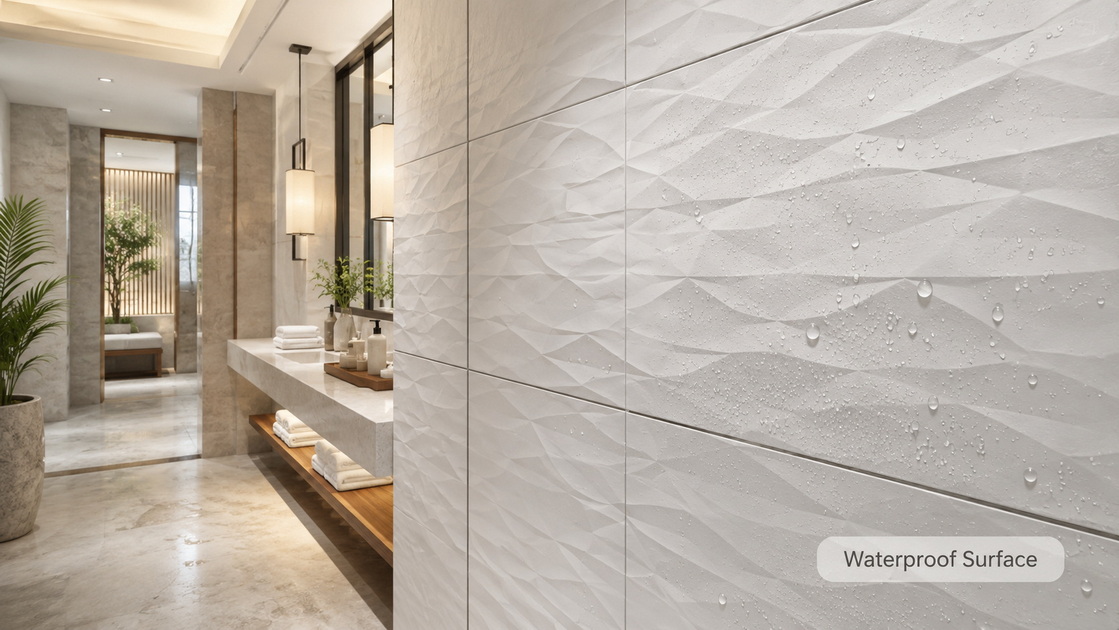
Potential applications include:
- Bathroom-adjacent walls
- Hotel washroom dry areas
- Kitchen walls outside direct heat zones
- Laundry rooms
- Basement renovations
- Spa corridors
- Utility rooms
- Commercial cleaning areas
Material selection remains essential. A panel with MDF or natural wood at its core should not automatically be treated as waterproof simply because it has a decorative surface film. The core, exposed edges, joint design, sealant details, and installation environment all matter.
Some 3D panels can improve the acoustic comfort of a room, but buyers should understand the difference between sound absorption and sound insulation.
- Sound absorption reduces reflected sound, reverberation, and echo inside a room.
- Sound insulation limits sound transmission from one space to another.
Fabric-wrapped acoustic panels, perforated systems, and panels with mineral wool, polyester fiber, or specialized acoustic backing can help absorb reflected sound. This can be useful in restaurants, meeting rooms, hotel lounges, home theaters, classrooms, podcast spaces, and open offices.
A decorative PVC or MDF 3D panel without acoustic backing may still change sound reflection slightly, but it should not be promoted as a true acoustic treatment without verified test data.
A quality 3D wall panel project often costs more upfront than a basic painted wall. The total budget may include panels, trims, adhesives, fasteners, labor, wall preparation, lighting integration, freight, taxes, and replacement allowance.
Premium finishes can increase costs further, especially:
- Natural wood veneer
- Custom colors or textures
- Fire-rated panel systems
- Acoustic-backed assemblies
- Curved or deep-relief designs
- Custom dimensions and packaging
- Large-volume projects with strict testing documentation
That said, the lowest purchase price is not always the lowest project cost. A durable, easy-clean panel can reduce repainting, repair, and downtime over the life of a commercial interior.
Not every 3D wall panel is appropriate for high-humidity or wet conditions. MDF, untreated wood, fabric, and some foam-based products may swell, stain, warp, or degrade if exposed to moisture.
For a bathroom, hotel wet zone, or humid coastal environment, buyers should ask:
1. Is the core material waterproof, not only the surface?
2. Are joints and cut edges protected?
3. Can the panel tolerate repeated cleaning?
4. What adhesive or fixing method is recommended?
5. Is the installation area exposed to direct water, steam, or only occasional humidity?
6. Is there a written test report for the claimed performance?
For direct wet areas, a waterproof panel system and correctly sealed installation detail are more important than a decorative wood-like appearance.
"Fireproof" is commonly used in marketing, but no buyer should accept it without knowing the test method, classification, specimen construction, and applicable building code. Many decorative wall panels are better described as fire-retardant or flame-retardant, depending on their tested performance.
In the United States, ASTM E84 evaluates the surface-burning characteristics of building materials, including flame spread and smoke development. Class A performance is generally associated with a Flame Spread Index of 0–25 and a Smoke Developed Index of 0–450. The required classification depends on the occupancy type, building location, installation condition, and local code interpretation.
For hotels, schools, healthcare facilities, airports, and commercial projects, buyers should request the actual report rather than relying on a certificate image or a general product claim.
A highly sculpted panel can look impressive, but it may require more cleaning than a smooth wall. Deep grooves, narrow flutes, fabric surfaces, and irregular stone textures can collect dust in high-traffic environments.
Choose the profile based on the maintenance plan:
- Use shallow, wipeable profiles in corridors, restaurants, retail, and healthcare-related interiors.
- Use deep decorative relief mainly on protected feature walls.
- Avoid delicate porous surfaces near food preparation, smoking zones, or heavy public traffic.
- Specify a cleaning method before the project is installed.
Some bold 3D wall panel designs can feel visually dated after a few years. This does not mean textured walls are a poor investment; it means design selection should be deliberate.
For long-life hotel, villa, and commercial interiors, safer choices often include:
- Vertical fluted panels
- Fine linear grooves
- Neutral wood grain
- Soft wave patterns
- Natural stone-inspired textures
- Matte, low-gloss finishes
- Modular patterns that can be repaired or replaced locally
Avoid selecting a highly dramatic panel purely because it performs well in a small sample or social-media image. Always review a full-size mock-up under the project's actual lighting.
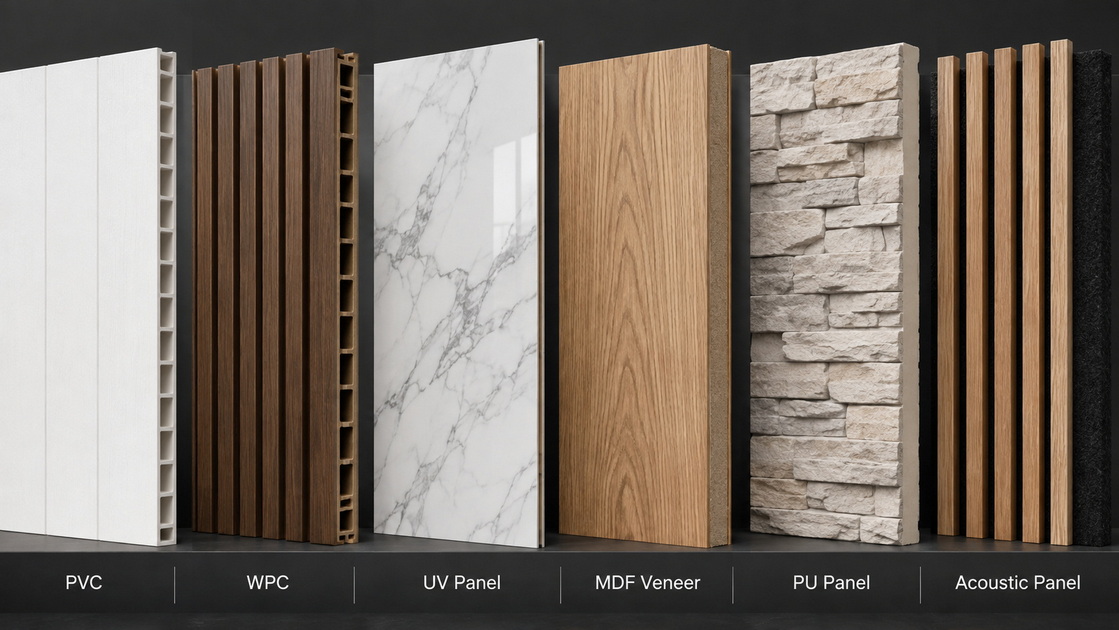
| Material | Key advantages | Main limitations | Best-fit applications |
|---|---|---|---|
| PVC wall panel | Waterproof surface, lightweight, easy to clean, cost-effective | Can be damaged by strong impact or excessive heat; quality varies by formulation | Bathrooms, hotel rooms, corridors, renovation projects |
| WPC wall panel | Wood-like appearance, stable structure, moisture resistance, decorative depth | Not all WPC products have identical fire or moisture performance | Villas, living rooms, commercial feature walls, hospitality interiors |
| MDF decorative panel | Smooth machining, precise profiles, premium painted or veneered appearance | Requires moisture control; exposed edges must be protected | Dry interior walls, luxury residences, offices, hotel suites |
| Natural wood veneer panel | High-end natural grain and warm visual character | Requires careful maintenance and humidity management | Villas, executive spaces, boutique hotels, premium retail |
| UV wall sheet | Glossy or stone-look surface, easy cleaning, rapid visual upgrade | Seams, edge details, and substrate preparation need attention | Hotel bathrooms, retail walls, reception zones, renovation projects |
| PU 3D panel | Lightweight, can imitate stone or brick, easy handling | Surface may dent or scratch depending on density and coating | Feature walls, themed interiors, display areas |
| Acoustic-backed panel | Can reduce reverberation when properly engineered and tested | Usually costs more and is not necessarily waterproof | Meeting rooms, restaurants, studios, theaters, open offices |
Start with the environment, not the finish. Ask whether the wall is located in a dry bedroom, humid washroom corridor, public lobby, restaurant, elevator hall, or acoustic-sensitive meeting room.
A hotel lobby may prioritize fire performance, impact resistance, cleanability, and brand appearance. A villa TV wall may prioritize texture and finish. A restaurant may need both visual warmth and better control of echo.
Before choosing a decorative pattern, list the non-negotiable technical requirements:
- Moisture or water resistance
- Mold resistance
- Fire performance classification
- Formaldehyde and indoor-air-quality requirements
- Impact and scratch resistance
- Acoustic objective
- Cleaning method
- Wall substrate condition
- Installation timeline
- Local code and certification needs
For U.S.-bound composite wood products such as MDF, purchasers should also verify compliance documentation. The U.S. Environmental Protection Agency states that regulated composite wood products, including medium-density fiberboard, must be labeled as TSCA Title VI compliant.
A strong supplier should be able to provide more than a catalog image. Request:
- Physical samples in the final color and finish
- Product specification sheet
- Material composition information
- Fire-test reports relevant to the project market
- Formaldehyde-emission documentation where applicable
- Water-resistance or moisture-resistance test information
- Installation instructions
- Warranty terms
- Project references or application photos
- Packing details and container loading plan
At Binmao Decor, material configurations can be developed around client requirements, including E1/E0-grade MDF options, wood veneer finishes such as oak and walnut, PVC/WPC structures, PU decorative panels, UV boards, and acoustic-backed constructions. The goal is to align the panel system with the application rather than force every project into a single standard product.
A 100 mm sample cannot show the full effect of a fluted wall, stone texture, or large-format UV panel. Build a mock-up large enough to evaluate:
- Pattern continuity
- Joint visibility
- Color consistency
- Lighting interaction
- Edge trims
- Cleaning practicality
- Installation speed
- Adhesive or fastener performance
- Compatibility with outlets, switches, doors, and furniture
For commercial projects, a mock-up is one of the simplest ways to reduce expensive rework.
The most common wall panel problems do not come from the decorative face. They come from poor preparation, incorrect fixing, or missing expansion details.
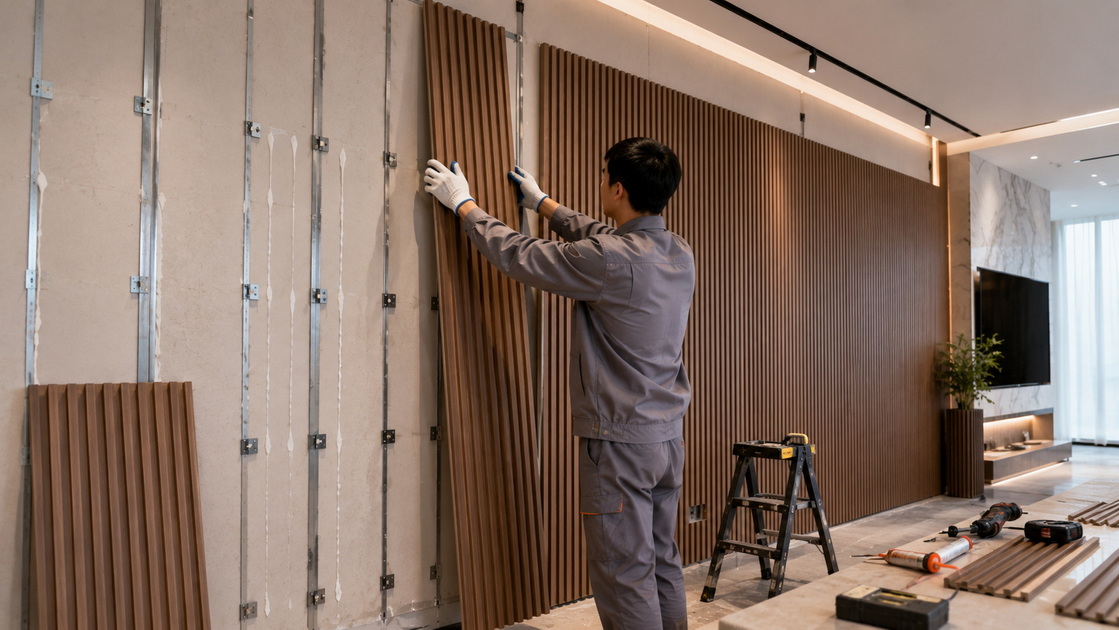
Follow these practical installation principles:
1. Inspect the substrate first. The wall should be reasonably flat, dry, sound, and free from loose paint, oil, mold, or active moisture problems.
2. Acclimate materials when required. Wood-based and composite panels may need time to adjust to site temperature and humidity before installation.
3. Use the correct installation method. Depending on the panel, this may include adhesive, mechanical fasteners, battens, clips, or a combined fixing system.
4. Plan joints before cutting. Align panel joints with lighting, furniture, door frames, and architectural lines whenever possible.
5. Protect cut edges. This is especially important for MDF-core, veneer, and moisture-sensitive products.
6. Allow for movement. Temperature and humidity changes can affect certain panel materials. Follow the supplier's spacing and trim recommendations.
7. Keep fire documentation with the project file. For commercial work, preserve product data sheets, test reports, and installation records for review by architects, contractors, or inspectors.
Yes—when the material and installation system match the project. 3D wall panels can offer a faster, cleaner, and more visually distinctive alternative to conventional wall finishes. They are especially valuable where a project needs brand impact, water resistance, easy cleaning, decorative depth, or a renovation-friendly solution.
However, buyers should not choose solely by appearance or price. The best 3D wall panel specification considers the entire lifecycle: installation, cleaning, fire performance, indoor-air-quality requirements, replacement needs, and local code compliance.
For hotel, villa, and commercial projects, Binmao Decor can support customized quick-install wall panel solutions in PVC, WPC, UV, PU, MDF, wood veneer, and acoustic-backed constructions. With 14 years of manufacturing experience, we help buyers match panel width, depth, finish, performance requirements, and technical installation support to the realities of their project.
Looking for a waterproof, fire-retardant, custom-finish 3D wall panel system? Contact Binmao Decor for samples, technical specifications, product test reports, and a tailored quotation for your residential, hospitality, or commercial project.
Quality PVC wall panels are generally suitable for moisture-prone interiors because PVC does not absorb water in the same way as MDF or untreated wood. However, true system performance also depends on seams, cut edges, substrate condition, adhesive, and installation quality. For wet-area projects, confirm the supplier's recommended installation detail.
Yes. They are commonly used in hotel lobbies, guest rooms, corridors, restaurants, spa areas, and reception walls. For hotel projects, prioritize fire documentation, durability, cleanability, impact resistance, replacement availability, and a finish that supports the property's long-term design direction.
They can, but only acoustic-specific constructions should be expected to deliver meaningful sound absorption. A fabric-covered panel or a panel with tested acoustic backing can reduce reverberation. A standard decorative PVC, MDF, or WPC panel should not be treated as a soundproofing product unless the supplier provides relevant testing data.
MDF panels can be appropriate for dry interiors when they meet the project's emissions requirements and are correctly finished and installed. U.S. buyers should verify EPA TSCA Title VI compliance for regulated composite wood products, including MDF.
The required rating depends on local regulations, occupancy type, and installation location. ASTM E84 is a common U.S. test method for evaluating surface flame spread and smoke development. Class A is generally associated with a Flame Spread Index of 0–25 and a Smoke Developed Index of 0–450. Always confirm requirements with the architect, contractor, code consultant, or local authority.
In many renovations, yes. Panels can often be installed over stable painted walls, tile, plywood, or other suitable substrates. The existing surface must be sound, dry, reasonably flat, and compatible with the selected fixing method. Loose tiles, damp walls, peeling paint, or major unevenness should be repaired first.
For a dry villa living room, wood veneer, MDF fluted panels, WPC panels, or high-quality PVC wood-grain wall panels can all work well. The best choice depends on budget, desired realism, maintenance preference, and whether the project needs additional moisture resistance or fire-retardant performance.
1. Binmao Decor. "Advantages and Disadvantages of 3D Wall Panels." Existing source article reviewed and substantively expanded for this rewrite. (https://wpcspc.com/advantages-and-disadvantages-of-3d-wall-panels/)
2. U.S. Environmental Protection Agency. "Formaldehyde Emission Standards for Composite Wood Products." Information on TSCA Title VI compliance and labeling for regulated composite wood products, including MDF. (https://www.epa.gov/formaldehyde/formaldehyde-emission-standards-composite-wood-products)
3. UpCodes. "Interior Wall and Ceiling Finish and Trim in Existing Buildings." Summary of Class A, B, and C flame-spread and smoke-developed index categories based on ASTM E84 or UL 723.(https://up.codes/s/interior-wall-and-ceiling-finish-and-trim-in-existing-buildings)
4. Capital Testing. "ASTM E84—Surface Burning Characteristics." Overview of ASTM E84 as a test method for comparative flame-spread and smoke-density measurements for interior wall and ceiling materials. (https://www.capitaltesting.org/astm-e84-surface-burning-laboratory-testing)
5. Composite Panel Association. "Product Emissions." Industry context on composite-wood formaldehyde emissions standards, including EPA TSCA Title VI and CARB requirements. (https://www.compositepanel.org/policy-and-stewardship/product-emissions/)
6. U.S. Made Supply. "ASTM E84—Steiner Tunnel Surface Burning Test." Explanation of Flame Spread Index, Smoke Developed Index, and standard classifications.
(https://usmadesupply.com/resources/building-codes-standards/fire-inspection-compliance/astm-e84)


