
Views: 266 Author: Sunny Publish Time: 2026-11-10 Origin: Site


Content Menu
● Can You Paint Every Type of Interior Wall Panel?
>> When Repainting Is Not the Best Option
● Choose the Right Paint and Primer for Wall Panelling
>> Which Paint Finish Works Best?
>> Match the Primer to the Problem
● Tools and Materials to Prepare
● How to Paint Wall Panelling Step by Step
>> 1: Inspect the Panels and Resolve Moisture Problems
>> 2: Clean Without Damaging the Surface
>> 3: Repair Defects and Prepare Joints
>> 6: Prime the Surface and Exposed Edges
>> 7: Apply Thin, Even Topcoats
>> 8: Inspect and Allow Full Cure
● Painting MDF Wall Panelling: Details That Prevent Failure
>> Seal Routed Profiles and Cut Edges
>> Do Not Confuse Emissions Grades With Waterproofing
● Can You Paint PVC, WPC, PU or UV Wall Panels?
● Hotel and Commercial Projects: Check Performance Before Appearance
>> Review Fire Documentation for the Proposed Finish
>> Separate Panel Waterproofing From Installation Waterproofing
● Troubleshooting Painted Wall Panelling
● Discuss Your Interior Wall Panel Specification With Binmao Decor
>> Can I paint wall panelling without sanding?
>> What is the best paint for MDF wall panelling?
>> Can I paint over varnished wood panelling?
>> How many coats does wall panelling need?
>> Can painted MDF be used in a shower?
>> Will repainting affect my panel warranty?
Knowing how to paint wall panelling starts with identifying what you are painting. MDF, solid wood, veneer and factory-finished composite panels may look similar after installation, but they do not accept paint in the same way. The right preparation helps prevent peeling, swollen edges and an uneven finish.
At Binmao Decor, our perspective comes from 14 years of manufacturing interior wall panels for residential, hospitality and commercial spaces. Our starting point is simple: compatibility matters more than choosing a fashionable colour.
This guide explains how to prepare, prime and paint wall panelling—and when preserving or replacing a factory finish makes better sense.

Many panels can be painted, but not every surface should be refinished without approval. Identify both the core material and the exposed finish before buying paint.
| Panel type | Main concern | Recommended starting point |
|---|---|---|
| Bare MDF | Porosity and absorbent cut edges | Use a suitable primer and seal exposed edges |
| Solid wood | Knots, tannins and surface movement | Check for staining and use appropriate preparation |
| Oak or walnut veneer | Thin decorative surface | Avoid aggressive sanding; confirm finish compatibility |
| Previously painted panels | Weak existing paint | Remove loose coatings and test adhesion |
| PVC, WPC or PU panels | Variable surface chemistry | Obtain approval for the complete coating system |
| UV-coated decorative panels | Hard, low-absorbency finish | Request written refinishing guidance |
| Acoustic-backed panels | Exposed fabric, felt or openings | Protect acoustic components and confirm suitability |
A primer approved for one type of PVC does not automatically suit every composite panel. Surface films, coatings and manufacturing treatments can change the result.
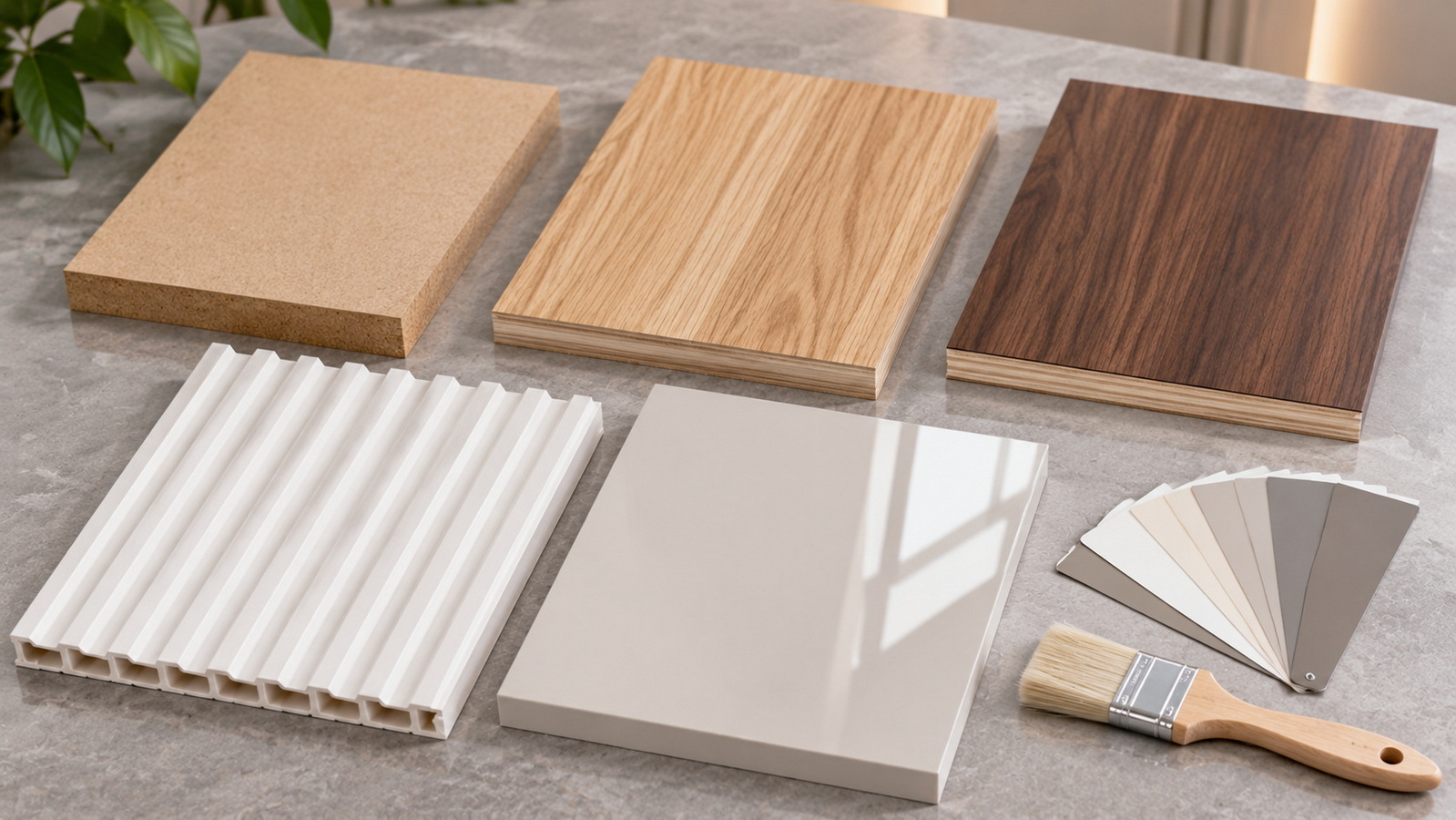
Keep the original finish if repainting would conceal an attractive wood grain or compromise a specialist surface.
For damaged, swollen or delaminated panels, investigate replacement rather than expecting paint to restore structural integrity. For commercial installations, check warranty conditions before making changes.
Select paint as part of a complete system: substrate, primer and topcoat. A decorative paint that looks excellent on plaster may not provide the required adhesion or cleaning resistance on panelling.
- Eggshell provides a restrained appearance for bedrooms, lounges and guest rooms.
- Satin offers a slightly more reflective finish for trim and frequently touched surfaces.
- Semi-gloss emphasises mouldings but can make uneven preparation more noticeable.
- Washable matt can suit contemporary interiors when its technical specification supports the intended cleaning routine.
Do not judge durability by sheen alone. Check the coating's intended use, cleaning instructions and suitability for timber or manufactured boards.
View colour samples under the room's actual lighting. A hotel corridor with warm artificial light can make the same shade appear different from a daylight-filled villa.
Bare MDF needs a primer suitable for porous manufactured board. Knotty timber or staining may require a stain-blocking product. Smooth factory finishes need a compatible adhesion primer.
Some primers allow application without sanding on specified surfaces. Others require abrasion or degreasing. Follow the instructions for the exact product rather than applying a universal "always sand" rule.
Gather everything before opening the paint:
- Compatible cleaner, primer and topcoat
- Fine abrasive paper or sanding pads, where required
- Suitable filler and paintable decorator's caulk
- Angled brush and roller recommended for the coating
- Masking tape, floor protection and paint trays
- Dust-extraction equipment for sanding
- Protective equipment specified by the risk assessment and product instructions
Read the coating's technical and safety information. Confirm ventilation, application temperature, humidity limits and recoat intervals.
Power sanding wood or MDF can generate hazardous dust. Use effective extraction rather than relying on a mask alone, and remove dust with suitable vacuum equipment instead of dry sweeping.
Check for loose boards, lifting coatings, water staining, mould and damaged edges.
Find and correct leaks or persistent condensation before decorating. Painting over dampness hides the symptom without resolving the cause.
Do not soak MDF during cleaning. A decorative coating is not a reliable repair for a swollen board or a substitute for a correctly specified wet-area system.
Remove dust first, then clean grease and residue using a product compatible with the existing finish.
Pay attention to hand-contact areas, kitchen deposits and previous polish. Contamination can prevent primer from bonding even when the surface appears clean.
Follow the cleaner's dilution and rinsing instructions. Keep moisture controlled around MDF edges and joints, and allow the surface to dry before continuing.
Fill nail holes and small defects with a filler suitable for the substrate. Allow it to dry, then smooth it without damaging surrounding material.
Use paintable caulk only where appropriate. Do not fill movement joints, drainage details or intentional shadow gaps simply to create a seamless appearance.
On tongue-and-groove panels, consider how the joint moves. A rigid paint bridge across a moving joint may crack.
For previously painted timber, remove loose material and feather sound paint edges. On MDF, use controlled abrasion to smooth imperfections without damaging the face.
Treat veneer especially carefully. The decorative wood layer may be thin, making aggressive sanding risky.
UV-coated and laminated panels need a different decision: obtain the supplier's preparation instructions before abrading them.
Remove dust thoroughly before priming. Dust left in grooves can spoil adhesion and create a gritty finish.
Before coating the whole wall, prepare a spare panel or discreet section using the proposed cleaner, primer and paint.
Check:
1. Whether the coating wets the surface evenly.
2. Whether staining or discolouration appears.
3. Whether the dried finish looks acceptable under actual lighting.
4. Whether adhesion is satisfactory after the specified curing period.
A small trial does not replace formal testing, but it can reveal obvious compatibility problems before they affect an entire room.
For hotel or retail projects, retain an approved sample as the workmanship benchmark.
Apply primer at the manufacturer's recommended coverage.
Brush into profiles and corners, then coat flat areas evenly. Avoid leaving pools in decorative recesses.
Inspect MDF cut edges after priming. If they remain rough or absorbent, follow the primer supplier's instructions for additional preparation or coating.
Do not assume that touch-dry primer is ready for sanding or recoating. Use the stated interval for the actual site conditions.
Cut in around edges and details, then roll larger sections while maintaining a wet edge.
Work in a consistent sequence so partially dried areas are not repeatedly disturbed. Avoid overloading the brush or roller.
Apply the specified number of coats and respect the recommended coverage. Additional thin coats may improve hiding, but excessive film build is not a substitute for suitable preparation.
Sand between coats only when the coating instructions permit it and surface defects require attention. Do not thin paint unless the manufacturer allows it.
Check the wall from normal viewing positions and under side lighting. Look for missed grooves, heavy edges, roller texture and inconsistent sheen.
Remove masking tape according to its instructions and the coating's condition. Refit accessories carefully without scraping fresh paint.
Drying, recoating and curing are different stages. A surface may feel dry while remaining vulnerable to washing, pressure or cleaning chemicals. Delay normal cleaning until the specified cure period has passed.
MDF's smooth face can produce an excellent painted finish, but exposed edges deserve particular attention.
Machined sections can absorb coating differently from the face. Inspect routed details after the first primer coat rather than assuming every area is equally sealed.
Uneven absorption can leave rough edges or visible differences in the finished surface.
E1/E0 designations concern emissions specifications; they do not establish waterproof or fire performance. Ask which test method and limits support the stated grade.
At Binmao Decor, MDF options and specialist waterproof composite panels serve different requirements. Select the product for its intended exposure, not simply its decorative appearance.
Sometimes—but only with a coating system confirmed as suitable for the particular surface.
These categories include different formulations and finishes. Generic advice to "sand and paint plastic" is not enough for a reliable specification.
Before repainting, ask the panel supplier:
- Is site painting permitted?
- Which cleaners and primers are compatible?
- Could solvents damage the decorative surface?
- Does repainting affect the warranty?
- Is the existing performance documentation still applicable?
For acoustic designs, avoid coating exposed felt, fabric, perforations or sound-absorbing components without approval.
If the original finish already provides the desired appearance and maintenance characteristics, retaining it can avoid unnecessary preparation and compatibility risks.
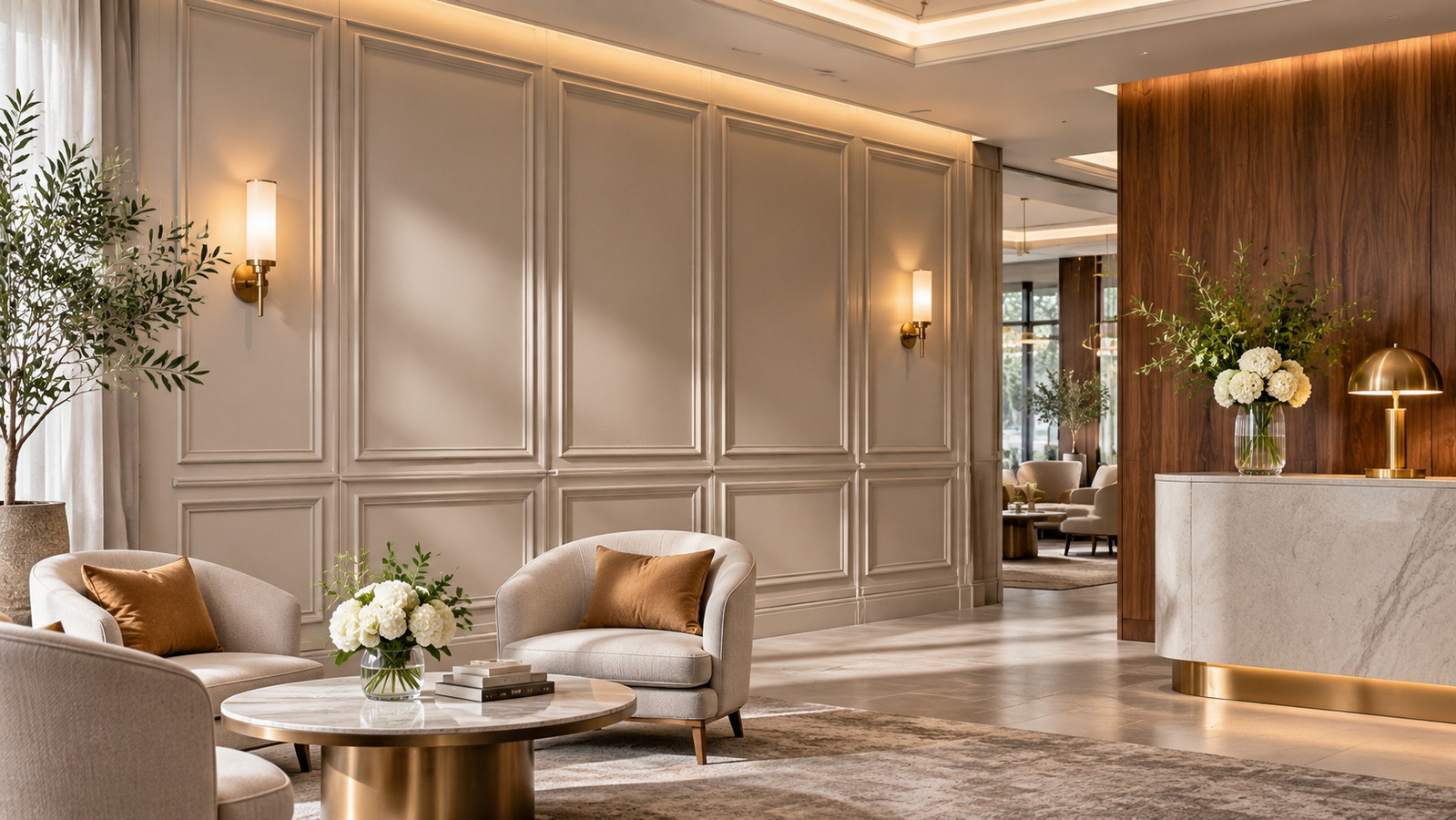
A guest-room feature wall and a busy commercial corridor face different demands. Specify the expected cleaning routine, exposure and maintenance requirements before approving a finish.
Do not assume that adding decorative paint leaves a panel's documented fire performance unchanged.
Ask the manufacturer or relevant specialist whether the proposed coating falls within the supporting evidence. Review the specified panel, surface finish and installation configuration together.
"Fire-retardant" should not be used as a substitute for a named classification supported by relevant documentation.
A waterproof panel does not, by itself, prove that the complete wall installation is waterproof.
Joints, penetrations, corners and substrate details also need an appropriate specification. Paint cannot compensate for unsuitable detailing.
Similarly, mould resistance does not remove the need to control moisture and maintain ventilation.
| Problem | Possible cause | Practical response |
|---|---|---|
| Peeling paint | Contamination, weak existing coating or incompatibility | Identify the cause, remove unsound material and retest the system |
| Brown staining | Knots, tannins or residual stains | Use a suitable stain-blocking approach |
| Rough MDF edges | Incomplete sealing or raised fibres | Smooth and reprime as instructed |
| Uneven sheen | Variable absorption or inconsistent application | Check preparation, coverage and drying conditions |
| Cracked joints | Movement or unsuitable filler | Review the joint detail before repairing |
| Sticky finish | Incomplete cure or unsuitable conditions | Follow technical guidance before applying more paint |
Avoid covering a failed finish with another coat until the underlying problem is understood.
For a new project, choosing the right factory finish may be more practical than repainting after installation.
Binmao Decor offers quick-install interior wall panel solutions for hotels, villas and commercial spaces, with custom widths, depths and finishes. Available configurations include MDF, oak and walnut veneers, PVC/WPC, PU and acoustic-backed structures.
Our range includes waterproof, mould-resistant and flame-retardant options. Confirm the relevant product configuration, test reports and installation requirements before specification.
Send Binmao Decor your project location, drawings, preferred finish, dimensions and performance requirements. Request samples, relevant test documentation and installation guidance before placing your order.
Some approved primer systems permit this on specified surfaces. Cleaning, sound existing coatings and a compatibility trial still matter. Follow the exact product instructions.
Choose an interior coating suitable for manufactured board, paired with an appropriate primer. Consider appearance, cleaning requirements and curing time rather than choosing by sheen alone.
Often, yes. Remove contamination, check the existing finish and use a compatible preparation and priming system. Address potential staining before applying the topcoat.
Follow the coating specification. A complete system commonly includes primer and multiple topcoats, but substrate absorption, colour change and coverage affect the requirement.
Do not treat ordinary painted MDF as a shower lining. Use a system explicitly approved for direct wet exposure, including the required joint and penetration details.
It may. Obtain written guidance before altering factory-finished, acoustic or performance-specified panels.
1- [Wall Panels World — "How To Paint Wall Panelling | Wooden & MDF Techniques | Repainting," published 29 August 2024]. Original article reviewed for topic coverage, structure and areas requiring clarification. [wallpanelsworld.co]
2- [Zinsser UK — "How to Paint MDF"]. Supports guidance on MDF porosity, preparation, priming and following product-specific drying instructions. [zinsseruk]
3- [Zinsser UK — "Bulls Eye 1-2-3"]. Illustrates the distinction between touch-dry, recoat and full-cure times, and product-specific adhesion claims. [zinsseruk]
4- [Zinsser UK — "B-I-N AQUA"]. Supports the need to check substrate-specific instructions, including preparation requirements for certain smooth surfaces. [zinsseruk]
5- [Health and Safety Executive — "Construction dust: Cutting and sanding wood"]. Supports dust extraction and suitable respiratory protection for sanding operations. [hse.gov]
6- [Health and Safety Executive — "Woodworking: Frequently asked questions"]. Supports MDF dust precautions, extraction and vacuum-cleaning guidance. [hse.gov]


